Thursday, March 20, 2008

Cool psoas experiment!

The psoas major and psoas minor are incredibly vital to maintaining healthy posture both in daily life and while belly dancing. Unfortunately, you can't really touch or feel your psoas muscles with your hands, as they are deep within the torso. The psoas muscles originate from the spine, right at the bottom of the rib cage, and come forward where they attach to the inside of the legs, which is the only part of the psoas that we can actually feel with our fingers (without dissecting ourselves, and that would be dangerous and a little messy).


The psoas muscles are hard to identify within the body. It's a lot easier to find and flex your bicep than it is to flex your psoas. Yet, the psoas muscles are very much involved in maintaining dance posture and home position. The tuck of the pelvis is achieved not only by contracting the lower abdominals but also the psoas muscles. But I was obsessed with answering this question: If when doing standing torso undulations, using the lower abdominals to achieve the bottom part of the undulation but without letting the pelvis rock back and forth, what keeps the pelvis still? The psoas! Now... how on earth do I know if they're actually engaged?


After taking a workshop on anatomy for bellydancers with Sarah J. Locke, I became obsessed with being able to to identify when my psoas muscles were working and when they weren't. And after nearly a year of becoming hyperaware of what my torso was doing, I finally came up with something that worked for me.


So, I experimented, and I came up with this little exercise:


Try this: Stand up, and get into dance posture: Feet parallel and close together, knees bent, pelvis tucked (glutes loose) using the lower abdominals, and chest lifted. Now slowly release the lower abdominals but keep your pelvis tucked and completely still. Hold it there. You should feel deep within your torso and on the inside of your legs where they attach to the pelvis, the psoas muscles, working away to keep your tuck as you release your abdominals. It may take a few tries to get the feeling, but it totally works. It's also a great way to isometrically strengthen your psoas. If you hold it long enough, you'll really feel those psoas muscles working away!
Maybe you're not as much as a geek as I am, but I thought this was pretty cool!

Thursday, March 13, 2008

Loving your body: The Physical

I swear I'll get to the music posts... but for now, something a little different: taking care of your body.

This week, for the first time ever, I had to cancel a workshop and performance because of an injury. My iliotibial band in my right leg (shown in the illustration to the right; click for a larger image) has "gone on strike", so to speak. Since Monday, I haven't been able to walk up stairs, sometimes just walk, without being in pain, particularly where the tendon attaches to the iliac crest, at the top.

I am, like many of us, a "can do" kind of person. If I commit to something, I want to follow through. I hate backing out of previous arrangements, particularly when lots of people are relying on me to be there, for them. So for me to admit that I can't be there is very hard.

The experience, however, got me thinking about how my body is my dance career. If I don't take care of it, nurture it, take the time to heal injuries, and rehabilitate myself, I'm doing a greater disservice not only to myself but to those who want to learn from me.

I also started thinking about how many of us approach this dance... like it's easy and always good for us. And, if we practice properly, listening to our body when it needs care, and pushing it to our limits, and not beyond, this dance can bring us great emotional and physical joy.

But I also treat this dance like a sport. I want to sweat. I want to feel "the burn". If I'm not sore the next day after a practice, then I think the practice was too easy. In pushing myself, however, I risk injury, as I often don't have the time to properly rehabilitate my muscles after a hard workout. I'll teach for two hours straight, and instead of taking 30 minutes to an hour to cool down, relax, and recuperate, I take a hurried shower and jump into bed, because it's late, and I have to get up early in the mornings. I think that my body can take it. I am a "can do" person, so I think my body can handle this repetitive physical stress... but this week my body decided that enough was enough. So, I had no choice but to listen to it.

It's important to know our physical boundaries. We need to know when to say, "I'd love to prove to myself that I can do this, but my body won't be healthy if I do." Many of us are self-competitive, and we always want to do better, more, be stronger than we were yesterday. Sometimes our body gives us these little reminders that it needs some love, and it's our responsibility to realize that sometimes proving to ourselves that we're strong might actually be a sign of mental weakness. It takes more strength to be humble and admit that we're on the wrong path than it does to stay stubborn and push ourselves beyond our limits.


Monday, March 10, 2008

Quite the character.

Before I go into my thoughts on the importance of music, I want to share some of my personal history with you all. I swear it's related.

When I was still figure skating, I took classes and lessons with an Armenian woman, Noemi Nargizian, who had danced with the Kirov Ballet during the Cold War. She immigrated to the United States after the Iron Curtain fell and moved to the San Francisco Bay Area, which is where I lived the first 18 years of my life, and where I spent 12 of those 18 years as a competitive figure skater. Although Noemi herself did not skate, she worked with several figure skaters to improve their presence on the ice, character development, musical interpretation, and emotional expression.

She was one of the sweetest and most giving people I have known, as well as humble and incredibly talented. She was always joyful and loved sharing her secrets of the Russian ballet with us, unknown figure skaters who had little experience in the world.

At the time I was working with her, I didn't realize how much her instruction would help me later on as a belly dancer. I still use her lessons today, both in my own performances but also in my classes.

One of the lessons I learned from her was creating a character that was true to your emotional perspective. She said that for every performance I should create a story, something close to my heart that would help me get into "that place" before taking my starting pose on the ice. It had to be something I could relate to personally, and no one else had to know what it was. I loved this concept, and I ran with it. I created a personal story for every skating performance from then on. I credit my doing so, and Noemi's loving training, with winning several awards for Artistic Expression in the competitions I entered.

When I started belly dance, I was so consumed with learning the new dance and learning how to move on a floor instead of slick frozen water, that I forgot about Noemi's wisdom.

It wasn't until 2005, when I took a Level I three-day workshop with Suhaila Salimpour that I started thinking about characters and emotional perspective again. She was talking about her Level III workshops, and how it's all about facing your demons and reaching deep inside to find deep-seated emotions. Then, a few weeks later I took a workshop with another dancer I admire greatly, Sera, from New York. She said that in your performances you have to "give your throat to the wolves". Basically, you can't be afraid to make yourself vulnerable.

At that point I realized that I had lost my perspective.

From then on, I started to approach all of my bellydance performances from a deeply personal level, creating a story behind each, something that would move me and help convey my feelings from the stage to the audience. I started creating characters which were aspects of my true self. I think this rediscovery of my emotional expression helped to elevate my performances to a new level, and helped me connect with my audiences.

If you create a character that you can't relate to, it's not going to work. You have to come from something deep in you, something that creates an immediate emotional reaction when you think about it. You have to feel it inside you, in your heart, in your whole body. For me, it starts with the music. I have to dance to music that invokes a strong emotional response. From there I spin my tale, whatever it might be...

Sunday, March 9, 2008

The Sight of Music

One of the most essential elements in my performances is the music I choose. Music is what drives me to dance. After all, every style of belly dance is all about becoming the music. However, I feel like that essence somehow got lost in the bustling trend of new dancers who identify with the tribal fusion supergenre.

So... I'd like to address these subjects over the course of a few weeks or so...

  1. The importance of dancing, not just performing a series of disconnected movements.

  2. Loving your music.

  3. Not choosing music because you heard someone else using it and you thought it was cool.

  4. Using your music as a springboard to creating an aesthetic for a performance or several performances.

  5. Knowing your music inside and out.

  6. Not allowing yourself or others to pigeonhole you into dancing to certain styles of music.


Stay tuned...

Thursday, March 6, 2008

Stillness and Nothingness

Or, how you can conquer creative burn-out.


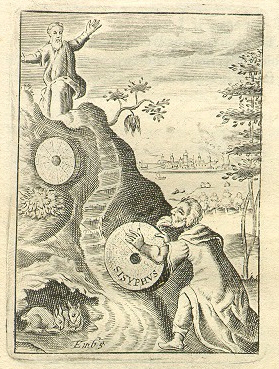
The Artist as Sisyphus
"The struggle itself is enough to fill a man's heart. One must imagine Sisyphus happy." - Albert Camus

Artists, it seems, put a tremendous amount of pressure on themselves to be creative, productive, and successful (not necessarily but sometimes in the monetary sense) all the time.

When we're not creating something new or acting on newfound inspiration, we easily get down on ourselves, questioning why we're not living up to our constantly climbing expectations. Many of us are not only seeking to create and innovate regularly, we're striving to produce art all the time. Because, well, we're artists!

We are self made Sisypheans: Pushing our rock up the hill eternally, only to reach the top and lose our grip, and the rock comes tumbling down, erasing our accomplishments... While this is an inherent element of being an artist, the uphill struggle can be exhausting. This is burn out.

Sometimes you just need to step away from the stone and let it sit at the bottom of the hill.

Zen and the Art of Bellydance
"As long as you seek for something, you will get the shadow of reality and not reality itself." - Shunryu Suzuki

Throughout the years I have discovered that being creative, as well as all learning many other aspects of this dance, is an experiment in Zen. The Oracle (Wikipedia) tells us that "Zen is notable for its emphasis on mindful acceptance of the present moment, spontaneous action, and letting go of self-conscious, judgmental thinking." I'm hardly an expert on Eastern philosophy, but my experiences with dance have been that when I let go of my self-criticism, my high expectations, and accept where I am at this moment, I progress much further in my art than when I force it.

I've noticed that my students are more likely to accomplish a troublesome movement when they take a moment to just play with it, releasing the inner analyst and critic. They beautifully perform the movement without thinking about it. I find this to be true with myself, as well. If I approach the movement without analyzing it, without forcing it, the more effortless and natural that movement becomes. Just as with technique, this is also true for the creative process.

Let your art happen independently of you.


Clearing the Creative Clutter
"The quieter you become, the more you can hear." - Baba Ram Dass

To pause the constant stream of dance aspirations in my head, I like to involve myself in activities completely unrelated to my artistic pursuits. No listening to potential dance music. No searching for new costuming ideas. No shopping for new DVDs, and no watching of dance performance or instructional DVDs. (I will, however, answer e-mails and phone calls related to the business end of my dancing, as that does not seem to interfere much with my creative process, but your experience might be different.) Eschewing these activities is the equivalent of a creative fast.

My favorite activity is listening to music to which I have no intention of dancing. For me, this usually means progressive rock like Rush (of course), Yes, Dream Theater, and others. The works of J. S. Bach also help clear out my creative clutter.

If you're constantly working on costuming, try putting it aside and working on a different craft. If you're constantly watching dance instructional or performance videos, watch something different, and don't seek inspiration in whatever new program you choose to watch. Just enjoy watching it for the program's sake. If you're constantly reading newsgroups that only focus on dance, stop reading those newsgroups for a while and read a book unrelated to dance or to creativity. (I love science writing, but I know that's certainly not something that appeals to all of you.) Sometimes it is good to stay in touch with what others are discussing, but it's easy to get sucked in to the endless dribble of dance drama as well. I find that those newsgroups offer lots of chaff and not a lot of wheat.

Find an activity you enjoy that is unrelated to your creative pursuits. Immerse yourself in that activity, relish it, and you'll find yourself feeling mentally and emotionally refreshed. And most importantly, (I think this is the most difficult part for us) give yourself permission to step away. Time away from your art will do you no good if you constantly feel guilty for not creating. You must consider your creative break as a gift to yourself.


The Enjoyment of Now
No thought, no reflection, no analysis, no cultivation, no intention; let it settle itself....

By turning your focus away from your creative pursuits (in my case, dance), you'll find yourself focusing on the enjoyment of now, rather than the anxiety of making your next great artistic creation. Your enjoyment of now will help you quiet your judgemental mind, your No Demon, your doubts and fears.

Why is Now so difficult to enjoy? Because once you recognize it, it's gone. That tiny point between the cones in the somewhat esoteric image above is Now. Compared with the history of what has happened and the possibilities of what is to come, Now is miniscule. But that doesn't mean you can't revel in it when you're there. And you're there right now. And now. And now.

Permission to Stop
Allow yourself time away from your art. Acknowledge it as healthy, refreshing, replenishing, and nourishing to your artistic self. When you feel the loom of burn-out approaching, recognize it, and take that moment to still your creative quests and refill your artistic well.

Tuesday, March 4, 2008

Inspiration: Rush.

For me, the best inspiration comes from sources seemingly unrelated to dance....


I'm sitting at home, watching one of my favorite live music DVDs, Rush in Rio, (that would be Rush the band, not Rush Limbaugh) and reading writings by the band's drummer, Neil Peart, and thinking about how much this band has inspired me as an artist, as a dancer, and as a human being.

Yeah, yeah. I know what you're thinking. Rush? You mean, like "Red Barchetta" and "Tom Sawyer"? You're probably thinking it's a little dorky. Well, welcome to the world of the BDP: full of unabashed Geekiness and Dorkitude.

Often described as the "thinking man's arena rock band", they have managed to gain a worldwide following of millions of fans by doing things their way. Never following the musical trends, never giving in to pop culture or record label pressures, always making genuine and real music, they have become rock legends. They never compromised their art for the sake of making it marketable. In fact, in staying true to themselves, they found a market for their music. And what's more remarkable to me is that there are millions of people around the world who adore this band of three guys from Canada, who rarely led tabloid-worthy lives, who make music because they love making music. They also constantly strive to improve their skills, always becoming more accomplished musicians, songwriters, and artists.

Another thing I admire about them is that they always approach their art with a sense of humor. They are young at heart. They've been playing music together for 30 years, and when they're on stage it's like they're teenagers again. It's clear that music, and sharing it with so many devoted fans, brings them infinite joy and happiness.

Their music is intellectual without being pompous, technical without being inaccessible, emotional without being sappy. To me it is beautiful, genuine, and heartening.

I want to be a dancer like that.

These three guys are role models for me, and their music reminds me of the power of the individual, to believe in myself and my abilities, and to continue to strive to improve upon that which I have learned, and to never compromise my personal principles to gain a greater following.

I leave you with some writing and lyrics by Peart that I think can apply to dance, and of course, to life in general. Peart is an artist and a thinker - a combination I aspire to become myself. My notes and quote sources are square brackets. I hope that some of this inspires you in some way as well.
While searching for a capsule definition of "excellence," which is described by Robert Pirsig [author of Zen and the Art of Motorcycle Maintenance - I highly recommend!] as "quality" and by Aristotle as "arete," I tentatively defined it as "doing something well enough that other people who do it admire your work," I think that nails it reasonably well - for a drummer, a bricklayer, or just a life well-lived. And certainly my own quest for excellence continues. While fully aware of all my faults, in music and in life, the eternal consolation is: "Hey, at least I'm getting BETTER!" I happily remain a "work in progress." [From Modern Drummer, October 1992]

-
There is a certain trait evident in human nature which some people seem to possess in greater degrees. It derives from a state of insecurity and low self-esteem and shows itself in the actions of those who wish to make themselves look good by making others look bad. You see it everywhere once you start to look for it. People who can't gain respect for their own merits feel obliged to try and tear down those who do. We see it in the failures who try to prove their aloofness by criticizing the actions of those who actually do something... [From The Daily Texan, 1981]

-
Spirits fly on dangerous missions
Imaginations on fire
Focused high on soaring ambitions
Consumed in a single desire

In the grip of a nameless possession-
A slave to the drive of obsession-
A spirit with a vision
Is a dream with a mission...
[From "Mission" on Hold Your Fire, 1987]

-
Keep on looking forward
No use in looking 'round
Hold your head above the crowd
And they won't bring you down
[From "Anthem" on Fly By Night, 1975]

-
I have spent my working life believing fervently in that distinction [of quality music versus music made only to sell albums], fighting to preserve it in my own work, and being offended by music calculated only to the lowest common denominator of commercial appeal — I would like to believe it makes a difference. [From a review of Daniel Levitin's This is Your Brain on Music, Bubba's Book Club, 2008]

-
I'm not giving in
To security under pressure
I'm not missing out
On the promise of adventure
I'm not giving up
On implausible dreams-
Experience to extremes-
Experience to extremes
[From "The Enemy Within, Part I of Fear" on Grace Under Pressure, 1984]

-
Art as expression
Not as market campaigns
Will still capture our imaginations
Given the same
State of integrity
It will surely help us along...

The most endangered species
The honest man
Will still survive annihilation
Forming a world-
State of integrity
Sensitive, open and strong
[From "Natural Science" on Permanent Waves, 1980]

-
What you own is your own kingdom
What you do is your own glory
What you love is your own power
What you live is your own story
In your head is the answer
Let it guide you along
Let your heart be the anchor
And the beat of your own song
[From "Something for Nothing" on 2112, 1976]

-
More excitement, less fear.
[From Roadshow, 2006]

Thursday, February 28, 2008

Friday, February 22, 2008

The brain-body connection

Western medicine is slowly realizing the error of separating the mind and body into unrelated elements of the human experience.... and so am I, both as a dancer and as an instructor. The following is a longer post that I've been cooking up for a few days. I think the subject matter is incredibly important. Of all the things I have learned as a dancer, the magnitude of the mind-body connection is the most important thing I will carry with me throughout my career.

The University of Chicago Basketball experiment.
I've started to tell this true-life story of the power of visualization to my dance students.

A number of people were divided into three groups, then they were tested on shooting a number of foul shots (free-throws) in basketball. The groups were then given different instructions.
Group 1: Did not practice foul shots for 30 days.
Group 2: Practiced foul shots every day for 30 days.
Group 3: Practiced foul shots only in their mind (visualization) for 30 days.

After 30 days the 3 groups were tested again and the results, compared to their initial performance were incredible.
Group 1: Showed no improvement at all, as one would expect.
Group 2: Showed a 24% improvement, which can not be considered satisfactory given that they had been practicing with the ball for one month.
Group 3: Improved by 23% which is amazing considering they had not even seen a ball for 30 days.

Basically, you can think about shooting hoops or actually practice shooting hoops, and either way, you'll improve. These results show the power of visualization, combined with physical training, can make all the difference to a player's progress. I think this is true with any activity we undertake, especially dance.

Practice in Your Head.
I admit, I don't do enough physical dance practice. However, I practice in my head, a lot. I visualize myself dancing at my best. I see in my mind's eye how my body should move through space, and how I want to interpret whichever song I'm obsessing over at that moment. This doesn't mean that I don't need to practice actual dancing, but it does mean that I get a mental head-start when I actually do find the time and space to practice. Of course, I need to keep my body flexible and strong - no amount of visualization will maintain physical stamina and strength - but positive thinking even when I'm sitting still can take my dancing and my performances a very long way. If you imagine yourself performing at your best, you will be closer to achieving your best in the studio and on the stage.

Of Chocolate and Butter.
I belong to a newsgroup on which all the members are Level 2 certified or higher in the Suhaila Salimpour format. One of the requirements for the Level 3 exam is the splits - right side, left side, and front. One member asked, "What do you think about when you're doing the splits?" I've never been that flexible. When I attempt the splits, I think something like, "OK. Fine. I'll try it. But I hate this." However, my unconscious brain must believe I can be that flexible, because I've been having dreams about doing the splits ever since I was a little girl.

But I realized after reading that message on the newsgroup that when attempting the splits I haven't been thinking that it's even possible. Of course, sometimes I still have that feeling of absolute dread whenever I try to go into the splits, but I'm never going to get anywhere with that attitude. I have to believe that I love the splits, I can do them, and that I've always been able to do them.

There's another component to this. Food.

And I'm not talking about how what you eat affects your physical and mental wellbeing. That's another post for someone else to blog. I'm talking about imagining yummy food. Food that makes you happy.

Another member on the newsgroup replied to the splits query, "I think of my body as pat of butter melting on a warm skillet." I thought that this was an excellent visual and then I thought, "What other yummy things melt?" Chocolate. Cheese... Just thinking about those things make me happy.

Try this. The next time you attempt a difficult stretch, maybe it's the splits, maybe it's a seated wide-legged forward fold, close your eyes, take a deep inhale, and as you exhale think of nothing except your favorite melty food item (chocolate really works well), and imagine that your body is becoming that food as you ease into the stretch. Picture that food in your head, whether it's butter, chocolate, or cheese, and have a very clear image in your mind's eye of that food melting. Do this several times in the stretch. I think it's important to keep your eyes closed, as this allows you to really focus on the image of melty food goodness in your head. Then, think of your body melting fully into the stretch, as if you were the most flexible human on the planet. Flexible. Melty. Food. Mmm...

The "No" Demon.
Every one of us has a "No" Demon. It is sum of our self-doubt, psychological damage, internal censor, and self-inflicted limitations. It also feeds on fear... Fear of appearing or feeling inadequate, inexperienced, incompetent, uncreative, stupid, and (my "No" Demon's favorite) not good enough. What we often don't realize, however, is that our past fears affect greatly our current physical state. When we push our bodies beyond what we think are its limits, negative past experiences can often hinder us from moving forward and improving our physical selves even more.

I'll share some of what feeds my "No" Demon with you all. I was brutally teased in school, from 2nd to 8th grade (including a death threat against myself and my family, and even some physical abuse like hitting and punching). It was a relentless barrage of spite, hate, envy, and jealousy from my classmates. I never felt like I had an adult advocate in the school who would take my concerns, and my emotional pain, seriously; I felt like some teachers didn't care, some didn't think it was a big deal. I certainly didn't feel like I had any classmates that I could trust and call "friend." I would say that most of this cruelty stemmed from the fact that I have been a consciencious over-achiever (even since Kindergarten!) my entire life, and that my obvious nerdity beamed out like a beacon for any unhappy classmate to attack. I was an easy target. I would cry when teased. I cried because it hurt, but mostly I cried out of frustration because I knew I had no adult advocates and that there was nothing I could do to get back at them, because... then they'd get me in trouble. "Ignore them," the adults would say. "Oh, maybe the boy just likes you," they would say. "Toughen up," they would say. "Kids will be kids", they would say.

The worst of it all happened in P.E. class.

In 8th grade, I learned to toughen up. But in toughening up, I sealed off my emotions, pushing them way down into the depths of my subconscious. But they didn't go away.

So, under physical duress, my emotional barriers fall, and my Demon comes back. Because most of the teasing happened in P.E., a certain amount of physical activity, such as the weeklong Level II Suhaila Salimpour format workshop, will trigger those memories and emotions that are held within my body. The only way to deal with this is to let it out: cry and experience that anger that I keep within myself and visualize it releasing from my body so that I can move forward as a human, artist, and dancer.

My "No" Demon, the one that tells me I can't do the splits, lives in my body, and gorged itself on my childhood and adolescent pain. My job now is to starve it.

Telling the "No" Demon to fuck off.
As we practice, and especially as we become performers, the "No" Demon is quickly biting at our heels, and if we aren't careful, it can grow and eventually eat us alive. It's always there, behind us, threatening us with failure. It's the voice in your head that says....
..."I can't do that."
..."Ok, I'll try, but I won't be able to do it."
..."Mary, Louise, and Isabel can do it, why can't I?"
..."I'll never be able to do that."
..."I'm just not good at this."
..."I hate this move."
..."I'm not good at this movement."

The more you tell yourself that you can't do something, the more you won't be able to get past that self-created mental block. You will think yourself into a self-fulfilling prophecy.

You can tell the "No" Demon to fuck off by turning each negative statement around and making it positive.
..."I can do that."
..."I'll try, and do my best."
..."It's ok that Mary, Louise, and Isabel can do it. I need pay less attention to them and more to my own progress. I can do it too."
..."I will be able to do that."
..."I will practice this move more."
The "No" Demon thrives on your negativity.

Try this. Draw a picture of your "No" Demon. You don't have to make it pretty. Actually, the uglier and more raw, the better. Use color. Personally, I like using crayons because of their inherent association with childlike innocence. My Demon has big sharp teeth and angry red eyes; his mouth is open, incisors prepared to bite, ready to tear me apart. If it helps you connect with your "No" Demon, give him or her a name. Once you have completed your drawing, say a not-so-fond farewell (I tell mine to "fuck off" because it's strong, succinct, and to the point) to your demon and rip the paper in half. Do it with purpose. Tear that paper like you mean it. Don't tear it up so much that you can't recognize the image anymore. Keep your torn up image somewhere accessible so that when you start to lack self-confidence you can look at your "No" Demon and remember that you are in control.


Visualization is key.
The basketball experiment, practicing in your head, chocolate and butter, and telling the "No" Demon to fuck off are all part of positive visualization. If your brain can see yourself doing something, you have the capacity to achieve it. Of course, this applies only within reason... I can imagine myself flying using only the flapping of my arms, and we know that's not very likely to happen in the near future. However, I can see myself in my head doing the splits, and when I think about doing the splits, I am sending an unconscious message to my muscles and joints, telling my body that it can do the splits. Once I melt away that mental block, I truly believe that I will be able to do the splits. If there's a movement that you're struggling with, imagine yourself executing that movement, and doing it well. Then, with that image in mind, get up and try it. You'll be amazed at how far a little mind power will take you.

...it is gradual, yet inevitable.

Thursday, February 21, 2008

Inspirational Decay

So, some of you know, I like industrial decay. I find it eerily beautiful, and the feeling I get when seeing it, either in photographs or in real life inspires so many of my performances. The textures influence my costuming; the colors play into my make-up choices.

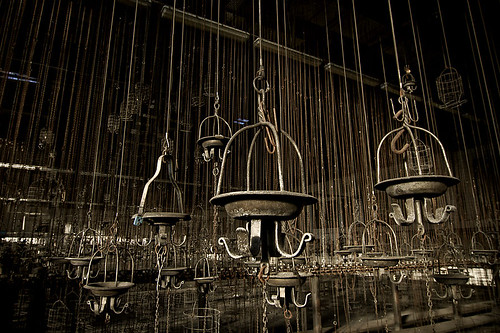
Tonight I found a blog that is all about posting the best photographs of industrial decay from the photosharing website flickr. It's aptly called "Industrial Decay". I wanted to share it with you, as well as some of the beautiful photographs posted there.


What unusual things do you find beautiful?

Wednesday, February 20, 2008

Confident Humility.

Where is that line between being confident in your abilities, and yet remaining (or becoming) humble about them?

I think that there's a spectrum.


Self-Doubting ------------------ | ----------------- Self-Absorbed


As an artist, and as a human being, I think I'd like to be somewhere in the middle: sure of myself to be able to sell myself without self-doubt creeping in to cripple my efforts, yet humble to genuinely accept and appreciate feedback and to evaluate my art and actions and accept criticism about them.

I think that I fall somewhere around here:


Self-Doubting -----------*me*------- | ----------------- Self-Absorbed


For me, my self-doubt comes from my need to be better than I am wherever I am in my journey as an artist. Most of the time this is healthy ambition that drives me to improve.

However, self-questioning can easily turn to self-doubt, and with self-doubt comes looking outward for approval from other people, comparing myself to others (where it's not warranted), and generally letting my insecurities handicap my self-esteem. I don't think I'm as good a dancer as I could be. I could certainly practice more. I could probably engage more with my students. I struggle, as many of us do, with finding my identity as an artist, particularly after several comments from the uninformed implying that I dance very much like other more well-known tribal fusion artists.

If we think about our weaknesses more than we focus on our strengths, we can slide backwards into detrimental self-doubt and insecurity.

Whereas, self-absorption is looking inward and seeing only or mostly great things. From what I can imagine, an artist who is self-absorbed is slow to consider criticism and "try it on", they see themselves as more accomplished than their colleagues, and have a hard time talking about anyone but themselves. Compliments, to the self-absorbed, are mere confirmations of what they already know. "Yes," they say inside, "I am fabulous." Frankly, I have a hard time putting myself in the self-absorbed's shoes.

Where does that leave us?
Accept compliments when you receive them. Even if they're nothing more than ass-kissing, accept them and let them bring you a little bit of joy. Accepting a compliment with humility and honesty forces you to open up your heart a little to the person offering the compliment. Yes, this makes you temporarily vulnerable, but that which scares us makes us stronger. Thank the person and mean it.

Accept criticism when you receive it. Even if it's as dumb as "OMG, I HATE the way she wears those bracelets." Allowing yourself to consider criticism also makes you vulnerable because you are questioning that which you believe in, but welcoming in criticism also makes us stronger. Try it on; see if it fits. Maybe those bracelets weren't flattering afterall.

We must strive to find a balance. Without self-assuredness, we can't promote ourselves. We'll constantly think we aren't good enough to be "out there" and we'll sell ourselves short. But if we slide too much the other direction, we can cease learning, never believing we owe anything to anyone, completely consumed by our own perceived greatness.